Begin with one kind of organization
A studio under MissionDesign.com could help organizations turn a clear purpose into a usable brand identity. The first offer would be strongest with a defined client group: local cultural organizations, community services or small manufacturers with a particular approach to making things. Choosing a group gives the founder a useful research field. The studio can learn how those organizations explain themselves, where their materials break down and who has to use the finished system.
Imagine a community arts venue preparing a new season. Its problem might look like a need for a refreshed logo. A closer look could reveal that visitors cannot tell which events are suitable for them, volunteers improvise signs and each department describes the venue differently. The studio's first job is to understand those situations. A new identity becomes more useful when it answers a concrete communication problem.
Make the purpose testable
The opening workshop should end with decisions that can guide design. Ask the team to name the audience, the change it wants to support and the behavior it wants from a particular communication. For the arts venue, a useful result could be a family finding an appropriate event and knowing what to expect before arriving. That is more specific than asking for an identity that feels inclusive.
Collect actual materials before discussing visual taste. Review an event page, a printed schedule, a building sign and an email confirmation. Ask staff which questions they answer repeatedly. Speak to a few visitors about the last time they tried to plan a visit. The founder then has evidence to bring into the design discussion, rather than a collection of competing preferences about color.
The Design Council's Double Diamond separates understanding and defining a problem from developing and testing possible answers. That distinction is useful here: keep the question open long enough to discover what the identity actually needs to do, then commit to a focused direction.
Sell a usable system
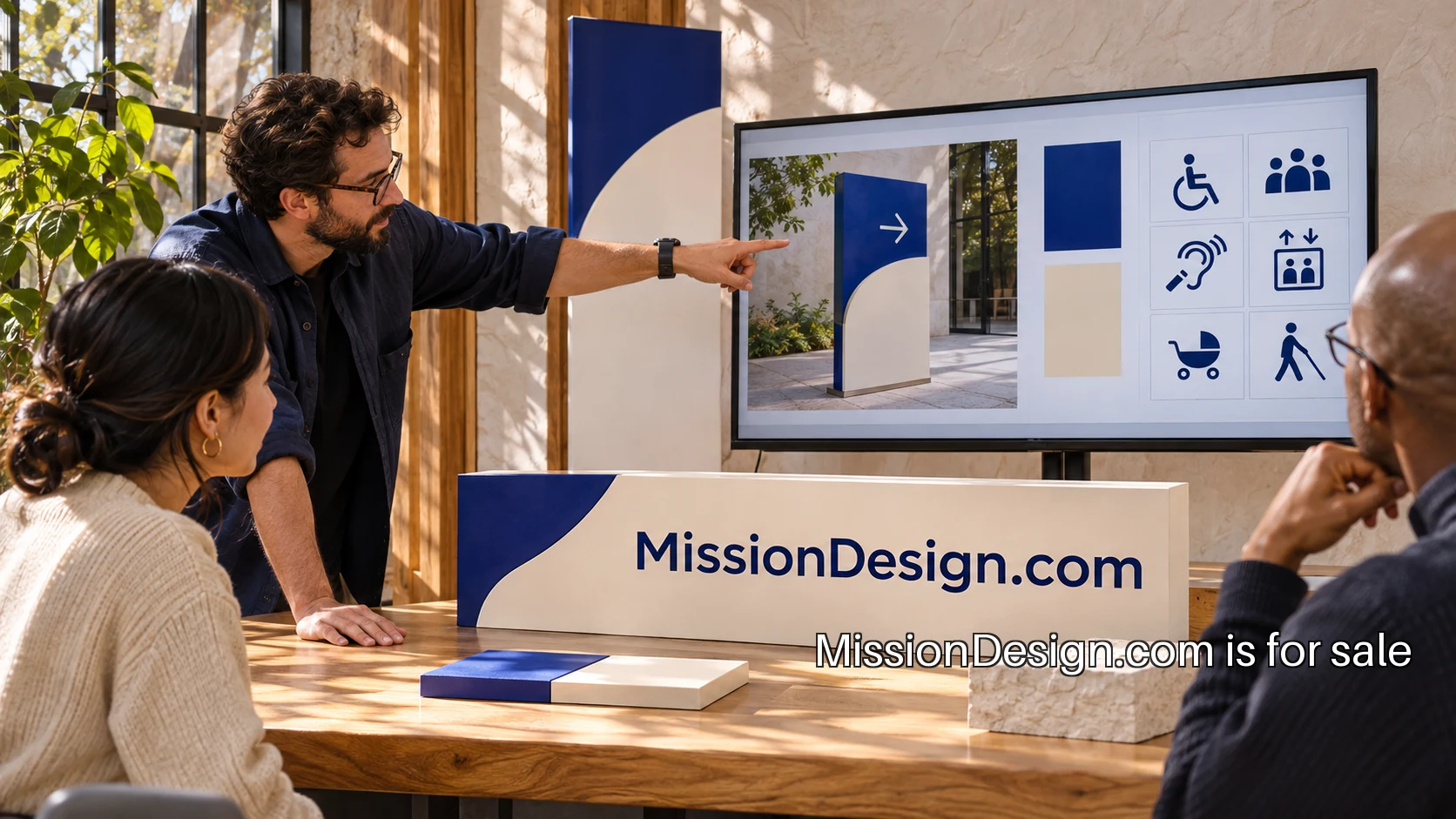
A first engagement could include an agreed positioning statement, a compact visual system and a small set of working applications. Keep the applications close to the client's daily tasks. The venue might need an event template, a schedule layout, entrance signage and a one-page guide for volunteers. Each item should demonstrate the same hierarchy: event type, date, access information and next action.
The founder can explain why a decision belongs in the system. Larger event names may help a visitor scan a busy schedule. A limited set of categories may make programming easier to navigate. A consistent location for access details may save someone from searching several pages. Those explanations give the client a way to evaluate the work beyond personal taste and a vocabulary for using it later.
Test it where it will be used
A brand review should include realistic content. Use a long event title, a last-minute cancellation and a page with several similar events. Ask a staff member who did not attend the design sessions to create a new item using the templates. Watch where they hesitate or invent a workaround. A system that only works with the designer's chosen sample is not ready for handover.
Include accessibility in those trials. Check text contrast, reading order and the way information is communicated without color alone. The W3C guidance on involving users explains why evaluation with disabled people should complement standards checks. For a venue, that could mean learning how someone using magnification finds practical visiting information, then revising the template around the actual task.
Build a portfolio around decisions
A case study for this studio would show the starting problem, a few important observations and the decisions that followed. Include a page before and after the work, but explain what changed in the information and why. A reader should be able to follow the argument even if the visual style is not their own preference. That makes the portfolio useful to someone considering a similarly difficult project.
Obtain permission for any research quotations and photographs. Separate measured outcomes from observations made during a small trial. If staff found the template easier to use in a rehearsal, describe that rehearsal accurately. The strongest case study has a clear chain from evidence to design, with the finished identity doing a specific job.
Give the studio a repeatable first offer
A founder could begin with a short discovery engagement, followed by a separately agreed identity project. The discovery output would be a brief, an application list and an agreed set of evaluation tasks. That boundary makes it easier to plan the design work and for the client to decide what happens next. It also prevents a vague request for a new look from expanding indefinitely.
MissionDesign gives that practice a consistent name across the brief, the work and the case study. The founder can introduce the studio with a focused descriptor and show how it works through one well-chosen project. Over time, the same approach can support a larger portfolio of organizations whose purpose deserves a clear, practical identity.
For the first clients, the founder could contact local arts and community networks with a short review of one public-facing event page. An invitation to a focused discovery session gives an interested organization a clear first engagement, while a published before-and-after example gives network coordinators something useful to share.